‘Without the GP’s input, many patient conditions seem alarming on the face of it, but someone’s baseline might be alarming, so there’s no benefit for them to be conveyed to hospital, because everything is already known and being managed.’
As part of the Enhanced Advice & Guidance service commissioned across NHS Wales, users attached to secondary care and ambulance organisations can access the Bypass Numbers feature. Accessed via the IG-secure Consultant Connect App, the functionality enables clinicians to utilise pre-programmed contact numbers for local GP surgeries, allowing them to skip the queue on the public switchboard and speak directly to practice staff for same-day emergency communications, speeding up patient care.
We spoke with Joseph Wilday, a Trainee Advanced Paramedic Practitioner with the Welsh Ambulance Services University NHS Trust, and Rachel Brixey-McCann, a Clinical Biochemist at the University Hospital of Wales, to find out how the service has benefited them and their patients.
How do you utilise Bypass Numbers in your job role?
‘Within Medical Biochemistry, we support the diagnosis and management of disease through the biochemical analysis of serum/plasma or other bodily fluids. My work involves providing a clinical advisory service to clinicians on the appropriate use of tests, interpretation of results, and follow-up investigations if required. Using Bypass Numbers via the Consultant Connect App enables us to get through to GP surgeries much quicker than the main line. We use the functionality frequently when communicating clinically-urgent patient results to surgeries or if we need to discuss the results with the patient’s GP to determine whether additional tests are required or if the patient needs to be referred to secondary care.
‘For the communication of critical results, the duty GP needs to be alerted the same day (within two hours for many critical results), and their review may lead to urgent admission of the patient to A&E, urgent referral to secondary care, immediate alteration to the patient’s medication, or arranging for urgent repeat samples to be collected. Therefore, all critical results telephoned by biochemistry would ultimately alter the patient’s care.
‘The brilliant thing about Bypass Numbers is that calls are answered within a few rings, whereas using the general surgery line can sometimes take up to 30 minutes. On any given day, we can have up to 50 results that need to be communicated urgently for same-day review and intervention. If it always took 30 minutes to get through to a GP surgery on the main line, we simply wouldn’t be able to communicate these critical results within the required time-frame. Bypass Numbers are the way forward.’
– Rachel Brixey-McCann, Clinical Biochemist.
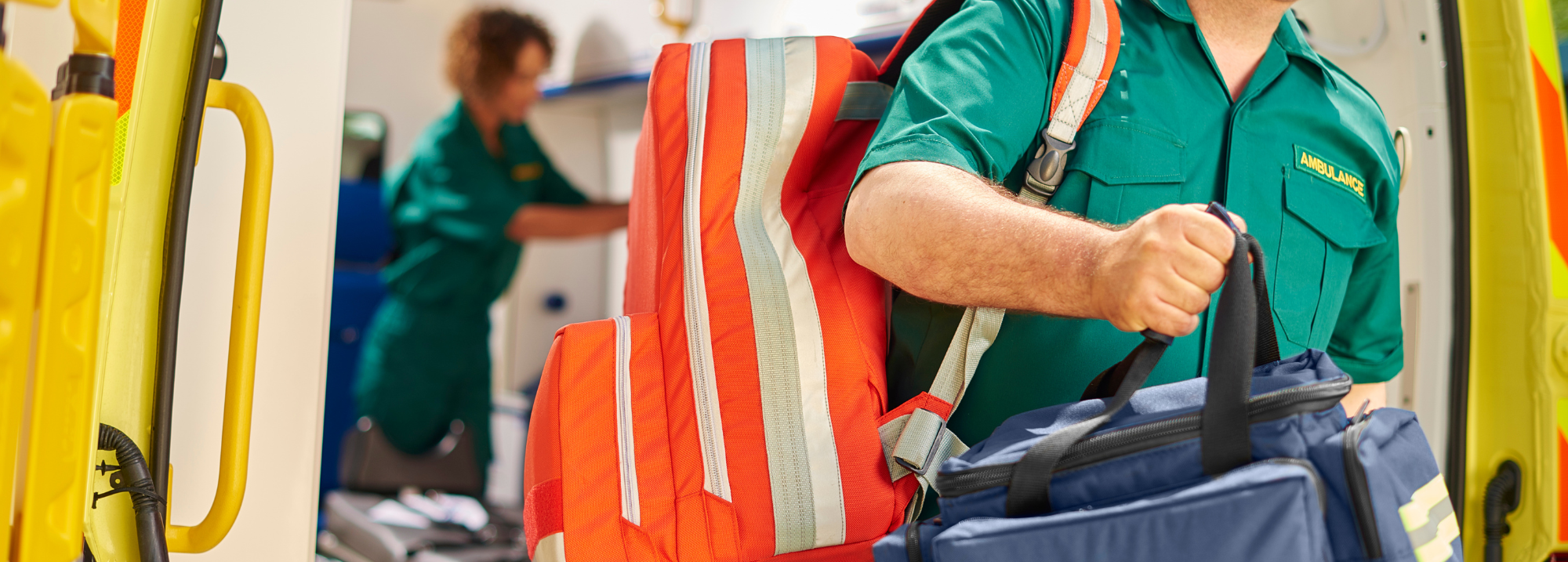
‘My job role means I spend 25% of my time in a GP surgery, 25% in university, and 50% on the road responding to emergency calls. Because I work day shifts, the Bypass Numbers are extremely useful when I’m responding to 999 calls. Otherwise, it means spending a long time waiting in the public-facing queue, especially early in the morning, and this can be quite frustrating because it extends my time on-scene.
‘The Bypass Numbers are especially helpful when attending to patients with complex medical histories because, quite often, the GP will be aware of or medicating the condition, so it’s good to discuss with them to find out if the patient’s current presentation represents an acute change. Without the GP’s input, many patient conditions seem alarming on the face of it, but someone’s baseline might be alarming, so there’s no benefit for them to be conveyed to hospital, because everything is already known and being managed. In my role, I have access to some GP records, but it’s not nearly as comprehensive as what the GP surgery has access to, and a lot of my role involves filling in gaps in the patient’s history.’
– Joseph Wilday, Trainee Advanced Paramedic Practitioner.
Patient example:
‘I attended a patient in their 70s who lived alone and was experiencing chest pains. This had happened before, and he was treated for various acid reflux symptoms, and described his current condition as feeling like that. The patient had a lot of health anxiety and struggled to pick apart whether his symptoms were new or ongoing. Chest pain is one of those presentations where we nearly always convey the patient to hospital because it’s very difficult to determine with any certainty that it’s not cardiac-related. In this situation, it sounded to me like it was an ongoing symptom of his gastrointestinal issues, so I used the Bypass Numbers feature to phone his GP because this was something they were aware of and had treated previously. I was connected to the GP immediately and had a great chat with them. They said the way the patient had described the pain sounded like acid reflux. After assessing his recent bloods, they concluded it was gastrointestinal and even booked him an appointment at the surgery in an hour. This was a great outcome because cardiac and gastrointestinal pain are very similar, and the GP’s input meant the patient got the chance to go and see his doctor, who’s more qualified and familiar with him than me, for a second assessment to be 100% happy. In this instance, the patient was very happy with the decision, and he didn’t contribute to the A&E queues and have investigations carried out for something which is almost certainly not cardiac related. If we hadn’t been able to get a hold of the GP and been confident this was typical for the patient, we most likely would have taken him to hospital, so this was a great result.’
– Joseph Wilday.
Click here to view and download a PDF version of this case study.
If you have any questions, please get in touch on 01865 261467 or at hello@consultantconnect.org.uk.